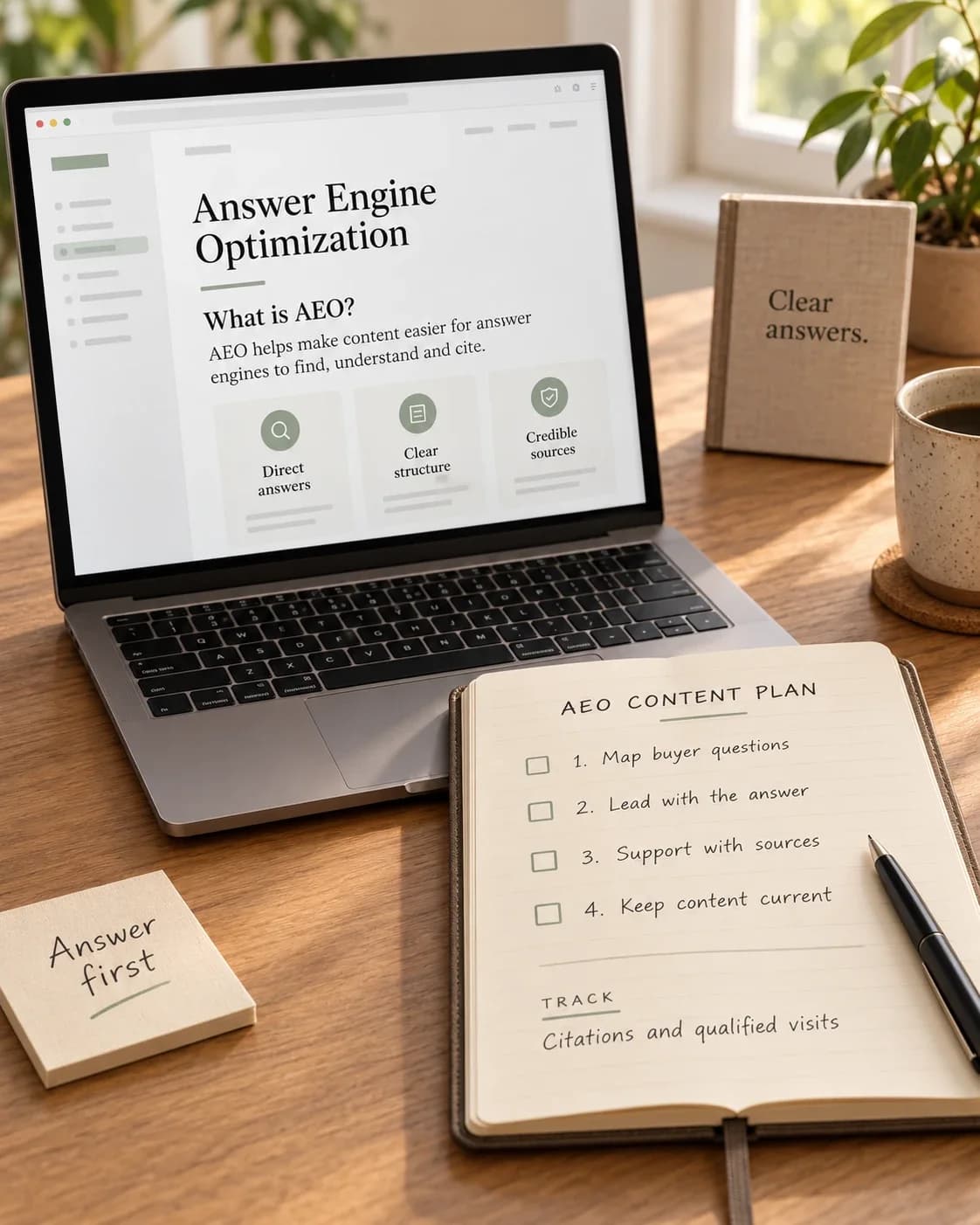
When buyers ask ChatGPT, Perplexity or Google's AI for recommendations, a few brands get named and the rest are invisible. Here is how AI tools choose sources, and a practical plan to get your SaaS brand cited.
Ask ChatGPT for the best tools in your category and you will usually get a short list with a few names. Buyers increasingly start there. If your brand isn't on that list, you are out of the running before they ever visit your website.
How AI tools decide what to cite
AI assistants answer from two places: what they learned in training, and what they find when they search the web for the question. When they search, they read the pages that rank and the sources that are widely referenced, then summarise. Three things make a brand more likely to appear:
- Clear answers: pages that state the answer plainly, near the top, are easy to quote.
- A recognisable entity: a brand described consistently across many sites is easier for AI tools to understand and trust.
- Third-party mentions: reviews, comparisons, lists and articles on other sites carry more weight than what you say about yourself.
Step 1: Make sure AI tools can read your site
Check your robots.txt allows the AI crawlers, such as GPTBot, OAI-SearchBot, ClaudeBot and PerplexityBot. Add schema markup for your organization, services, articles and FAQs. Consider an llms.txt file that summarises your site in plain text. And make sure your important pages are indexed in Google and Bing, because many AI tools search through them.
Step 2: Write answer-first pages
For every question your buyers ask, give the direct answer in the first two sentences, then explain. Use headings that match the question, short paragraphs and lists. Add a FAQ section to service, pricing and comparison pages. Pages written this way are the ones AI tools lift into their answers.
Step 3: Describe your brand the same way everywhere
Use one exact brand name, one category description and the same key facts on your website, LinkedIn, review sites, directories and author bios. If your name is close to another company's, say clearly what you are and what you are not. This is entity SEO, and it decides whether an AI tool describes you accurately.
- Create profiles on the review sites for your category, such as G2, Capterra or Clutch, and ask customers for reviews.
- Get included in the "best tools" and comparison articles that rank for your category.
- Publish something others want to cite: original data, a benchmark or a useful template.
- Contribute expert answers on podcasts, newsletters and community threads your buyers read.
Step 5: Measure every month
Write down ten questions your buyers ask, such as "best [category] tool for [use case]". Each month, ask them in ChatGPT, Perplexity, Gemini and Google's AI Mode. Record whether you are named, how you are described and which sources are cited. The sources that keep appearing are your outreach list.
Want a head start? Our free growth audit runs these checks for your brand and shows the five changes we would make first. Learn more about our answer engine optimization service, or read GEO vs AEO vs SEO.
Frequently asked questions
Technical fixes and better pages can show up within weeks when AI tools search the web. Being named from wider reputation takes longer, often several months, as mentions build up.
No. Organic answers can't be bought. You earn citations with useful content, a clear brand and mentions on trusted sites.
Yes. When AI tools search the web, they read the pages that rank well, so strong SEO increases your chances of being cited.